Evaluating Carnation Flower Designs for Real Embroidery Projects
When I first opened the Carnation Flower Drawing Coloring Books digital file, I wasn’t looking at it as a coloring page. I was looking at it as an embroidery designer. My immediate question was: can these illustrations translate into a beautiful, stitchable design that will hold up on real products? The answer, after a practical review, is a confident yes—with some thoughtful considerations for application.
The Mood and Shape: Where These Carnations Naturally Belong
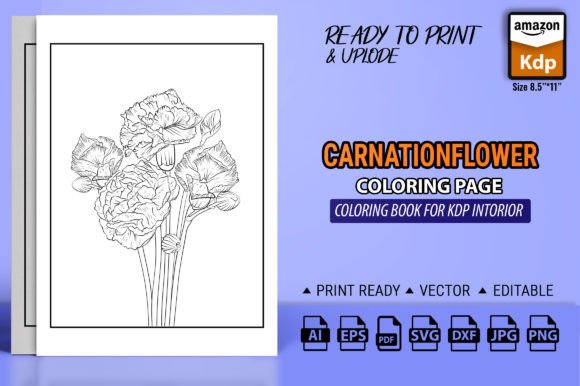
The collection presents a series of classic carnation blooms, rendered with a clean, illustrative line quality. The mood is gentle, slightly nostalgic, and undeniably pretty. This isn’t a hyper-realistic botanical study; it’s a friendly, approachable floral motif. That visual personality makes it a perfect candidate for projects where warmth and charm are the goal. I immediately pictured it on a custom embroidered pillow cover for a boutique home goods shop, or as a sweet, single-bloom accent on a baby’s sweater or nursery blanket. The layout, being formatted for a standard page, offers individual flowers and groupings that can be easily isolated and sized for various hoop sizes.
Translating Lines into Thread: Performance on Actual Products
In a real-life scenario—say, preparing a set of embroidered tea towels as a holiday gift—these designs shine. The outlined shapes provide clear paths for satin stitch borders or a clever combination of fill stitch for the petals and running stitch for the delicate stems. On a natural linen towel, this creates a handmade presentation that feels special and consistent. For a small business owner creating custom apparel, like a ladies’ sweatshirt, a well-placed carnation from this set adds value and a touch of personalized artistry without being overly complex.
The scalability of the vector-based artwork is a key advantage. Whether you’re mocking up a tote bag design for your Etsy listings or preparing a embroidered patch for a cap, you can adjust the size without losing clarity. This flexibility supports both small, delicate applications and larger, statement pieces. For commercial embroidery projects, such as a run of aprons for a local business, the clean lines ensure stitching clarity and a professional finish that builds customer trust.
Where to Apply Careful Attention
While versatile, these designs require a designer’s eye for context. The detail level, with its fine lines and potential for intricate petal layers, means you should be cautious on very small hoop sizes. On a curved surface like a cap, extremely tiny versions might lose definition. Similarly, stitching onto textured fabrics or stretchy fabric like a thin t-shirt demands proper stabilizer and a review of stitch density to prevent puckering or distortion.
Dark fabric backgrounds are another consideration. The illustrations, as provided, are line art. Their success on dark materials hinges entirely on your thread color choices and the contrast you create. A test on scrap fabric is essential here. Also, areas with densely packed petals could become bulky if filled completely; sometimes, an open, outline approach maintains better drape on garments and avoids issues in products needing frequent washing.
The Impact on Your Craft Business and Customer Appeal
Using a design like this isn’t just about the stitch; it’s about the final product’s story. A carnation embroidered onto a personalized gift, like a birthday pillow, carries a sentiment of affection and thoughtfulness. For your craft business, it offers brand consistency if florals are part of your aesthetic. The recognition of a familiar, lovely flower boosts buyer engagement—people know what they’re getting, and they like it. It elevates a simple item into a handmade product with inherent giftability.
From a purely practical standpoint, these files serve as excellent design assets. They can be used not only for the embroidery file itself but also for creating printable mockups for your online shop, helping customers visualize the finished product before ordering. This professionalism in presentation directly affects perceived value.
A Designer’s Practical Notes Before You Start Hooping
My final thoughts come from the embroidery machine side of the table. Always, always test the design on scrap fabric first. Use a fabric similar to your final project. This test reveals everything: how small details like the inner petal lines translate, whether your chosen thread colors pop or blend, and if the overall size feels right for the item.
- Check the design in both black and white mockups to judge its form independently of color.
- Compare how it looks conceptually on both light and dark backgrounds—you might decide it’s best suited for one over the other.
- Confirm the licensing terms of the original Carnation Flower Drawing Coloring Books product before selling any finished items or derived digital products. The category is listed as Graphics, and clarity on commercial use is paramount.
- Since specific machine file formats, exact stitch counts, or compatibility details aren’t provided in the core description, your essential step is to verify that the converted embroidery file meets your technical requirements before committing to a client project or batch production.
In essence, this carnation collection is a robust foundation. It provides the beautiful artwork; your skill as a maker provides the thoughtful application. When paired with careful testing and an understanding of your fabric and machine, it can become a reliable, charming part of your embroidery project repertoire, from heartfelt gifts to thriving small shop merchandise.