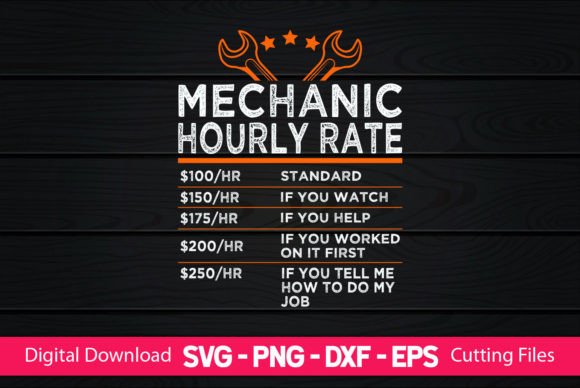
Mechanic Hourly Rate: An Authentic Graphic for Crafts and Branding
The First Impression: Rustic Utility Meets Modern Craft
When a client project demands authenticity, the first impression of a graphic design asset is critical. Opening the Mechanic Hourly Rate file, the immediate feeling is one of rugged utility and straightforward communication. The design evokes a mood of honest workmanship, with visual elements that feel hand-tooled and purpose-built. This isn't a slick, corporate graphic; it represents a style rooted in craftsmanship, workshop culture, and tangible results. It naturally fits clients like independent auto shops, maker spaces, tool brands, repair service startups, or any handmade business wanting to visually communicate value-for-time.
Real Client Scenario: Building a Brand for a Local Repair Garage
Imagine you're tasked with creating a complete brand identity for a new, locally-owned automotive repair garage. They want to stand out from the franchise competitors with a brand that feels personal, trustworthy, and skilled. Mechanic Hourly Rate becomes more than just a graphic; it's a potential cornerstone for the visual concept. It can directly support the design direction by providing a recognizable, thematic element that improves the visual mood, moving it away from generic clipart toward a more polished, industry-specific aesthetic.
Where This Design Asset Excels in Professional Projects
In real design situations, Mechanic Hourly Rate performs best when its rustic character is leveraged intentionally. For product labels on oil cans, tool kits, or custom parts packaging, it adds immediate thematic credibility. As a focal point on posters or flyers for a community car show or workshop event, it commands attention with its clear, bold statement. It translates powerfully to merchandise like t-shirt designs for team uniforms, mugs in the waiting area, or tote bags as customer thank-yous.
For digital needs, such as website graphics for a services page or hero images, it sets a strong tone. It works well as a bold, standalone graphic in blog visuals explaining service pricing or editorial design in a trade magazine. For social media, particularly Instagram posts or Pinterest pins targeting a DIY audience, it’s highly engaging. As a design asset for Cricut projects, it creates perfect stickers for toolboxes, window decals, or loyalty program cards. In large layout areas, like a shop wall mural or vehicle wrap mockup, its scale reinforces the brand message.
Best Uses: Hero Graphics, Decorative Accents, and Themed Collections
This digital product shines as a hero graphic on a price sheet or service menu. It works as a powerful decorative accent on packaging details for retail products like mechanic-themed hobby kits. It could anchor a themed collection of graphics for a full campaign—think “Summer Service Specials” visuals—across posters, digital ads, and printable mailers. For printable designs like wall art in the office, it adds professional, industry-specific decor.
Considerations and Limitations for Design Integrity
However, as with any commercial design asset, it must be used with careful judgment. In small sizes, such as a favicon or tiny app icon, the detail and text may become illegible, breaking visual hierarchy. In crowded layouts with many other elements, it could feel chaotic rather than intentional. Placing it on complex backgrounds or low-contrast designs would diminish its impact and readability.
It is not suited for minimalist branding seeking ultra-clean lines, nor for professional corporate materials like formal financial reports. The style is inherently bold and thematic, which affects brand consistency; it should be paired with complementary typefaces and colors to build a cohesive system, not used as a standalone solution for every application.
Where to Apply Caution: Small Scales and Corporate Contexts
Designers should be cautious using Mechanic Hourly Rate in small-scale applications or contexts requiring a neutral, corporate tone. Its emotional appeal is specific—engaging a practical, hands-on audience—and could undermine visual trust in a more conservative sector.
The Designer’s Practical Checklist Before Client Use
Before integrating Mechanic Hourly Rate into a client’s commercial design project, a professional review is essential. First, test the graphic in black and white to ensure its form holds without color dependency. Check contrast on both light and dark backgrounds; the strong outline should maintain readability. Preview it at thumbnail sizes and large format to confirm it scales appropriately for all intended uses.
Place it on real mockups—a t-shirt template, a mug, a website header—to see how it interacts with the product’s shape and context. If print quality is a factor, test a physical print to check for crisp edges, especially from the SVG or vector files. Review the provided file formats; the inclusion of SVG and EPS suggests good vector editability, allowing you to tweak colors or separate elements for complex packaging design.
Compare it with various font styles. How does it pair with a sturdy sans-serif for body text? Does it clash with a delicate script? It likely harmonizes best with other bold, display fonts. Most critically, confirm the commercial licensing terms explicitly. As a digital seller or print-on-demand seller, you must ensure the asset is cleared for your client’s business use, protecting both your practice and their brand.
Final Judgment: A Niche Tool with Strong Potential
Mechanic Hourly Rate is a niche graphic design asset with strong potential for the right project. Its impact on professionalism is contextual: for a handmade business in the trades, it elevates the aesthetic; for a tech startup, it might feel incongruous. It boosts audience engagement by speaking directly to a community that values clear, workmanlike communication. Ultimately, this creative asset is a useful, specialized tool. It won't fit every client brief in your creative marketplace, but for those projects demanding authentic, craft-oriented visuals—from Etsy product labels to a full small business branding suite—it provides a polished, ready-to-deploy foundation that feels both modern and respectfully traditional.